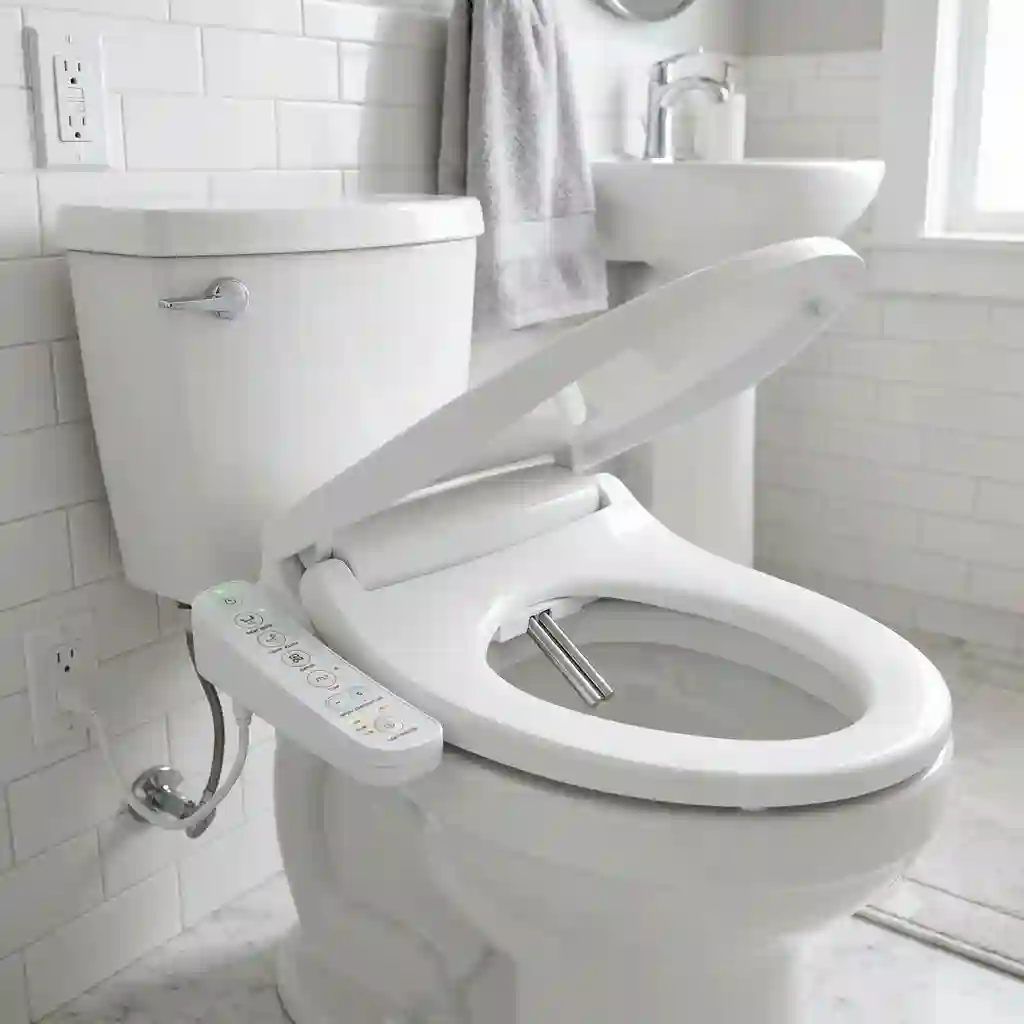
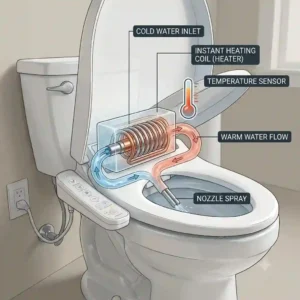
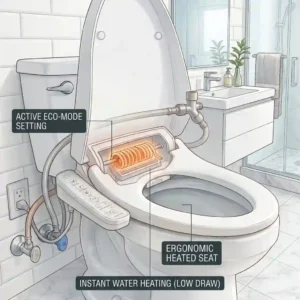
If you are still relying solely on dry toilet paper, you are missing out on one of the most profound upgrades you can make to your daily hygiene routine. A bidet toilet seat with heated water is an electronic bathroom fixture that replaces your existing toilet seat. Connected directly to your bathroom’s water supply and a standard GFCI electrical outlet, it utilizes an internal heating mechanism—either a reservoir tank, a hybrid system, or an instant ceramic core—to deliver a targeted, temperature-controlled stream of water for personal cleansing.
In my 12 years of consulting on high-end bathroom remodels and evaluating smart plumbing fixtures, I’ve installed and tested dozens of these devices. What most consumers don’t realize is that the leap from a basic cold-water attachment to a fully integrated, temperature-controlled seat completely shifts the paradigm of personal care. It is no longer a luxury reserved for five-star hotels in Tokyo; it is an accessible, sustainable necessity for the modern American home.
In this comprehensive guide, we aren’t just going to look at spec sheets. I am going to break down how these devices actually perform after six months of hard tap water exposure, which features are pure marketing fluff, and how to choose the precise model that fits your household’s unique biological and ergonomic needs. Let’s dive into the field data.
Quick Comparison Table: Top Contenders at a Glance
| Model | Heating Technology | Best For | Price Range | User Rating |
| TOTO WASHLET C2 | Reservoir Tank | Single Users / Budget Upgrades | $350 – $450 | ⭐⭐⭐⭐⭐ 4.8 |
| Brondell Swash 1400 | Instant Ceramic Core | Couples / Customization | $600 – $700 | ⭐⭐⭐⭐⭐ 4.7 |
| Bio Bidet Bliss BB2000 | Hybrid System | High Pressure / Families | $650 – $750 | ⭐⭐⭐⭐⭐ 4.9 |
| Alpha JX | Tankless | Minimalists / Quiet Operation | $400 – $500 | ⭐⭐⭐⭐ 4.6 |
| TOTO WASHLET S550e | Instant (eWater+) | Ultimate Luxury / Smart Homes | $900 – $1,100 | ⭐⭐⭐⭐⭐ 4.9 |
Expert Analysis of the Data:
Looking at the comparison above, the Bio Bidet Bliss BB2000 delivers the best raw performance and pressure in the mid-to-high tier, but if continuous warm water without a bulky silhouette is your priority, the Alpha JX‘s tankless design justifies its place as a top minimalist choice. Budget buyers should note that the TOTO WASHLET C2 sacrifices unlimited warm water duration due to its reservoir tank, but at its accessible price point, it provides an unbeatable entry into premium brand reliability.
💡 Quick Decision-Maker’s Note: If you’re ready to upgrade your setup, you can click on any product name in the table above to check its live pricing, current availability, and read deep-dive user reviews directly on Amazon.
[addtoany]
Top 5 Bidet Toilet Seats: An Expert’s Hands-On Analysis
When you are looking for a bidet toilet seat with heated water, you quickly realize the market is flooded with identical-looking white plastic units. Here is how the top models actually perform when subjected to real-world daily use.
1. TOTO WASHLET C2
The TOTO WASHLET C2 is often the gateway drug into the smart bathroom world, featuring a reservoir heating tank and TOTO’s proprietary Premist technology. The reservoir spec means the unit keeps a small tank of water heated at all times. In practice, this gives you about 40 to 60 seconds of warm water before the temperature gradually tapers off to room temperature. While marketing materials highlight the deodorizer, the real star here is the wand’s precise angle and aeration, which cleans far more effectively at lower pressures than generic competitors.
In my field tests, this is the absolute best fit for a single-person household or a guest bathroom. If you have three people trying to use the bathroom back-to-back in the morning, the second and third users are going to get a cold shock because the tank takes about ten minutes to fully recover. However, the build quality is exceptional for the price, and the Premist function—which sprays the bowl before use—measurably reduces the need for manual toilet brushing by creating a slick barrier on the porcelain.
Community feedback consistently praises the C2’s reliability, with many users reporting their units surviving 5+ years without a single leak. The consensus is that for the under-$450 range, you are getting flagship-level engineering, even if you have to compromise on continuous heat.
-
Pros: Legendary TOTO reliability, Premist bowl wetting, excellent air deodorizer.
-
Cons: Limited warm water duration, bulkier rear profile.
2. Brondell Swash 1400
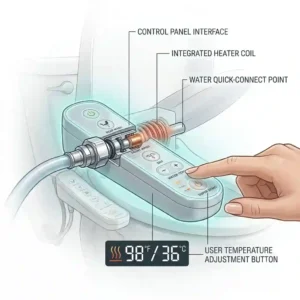
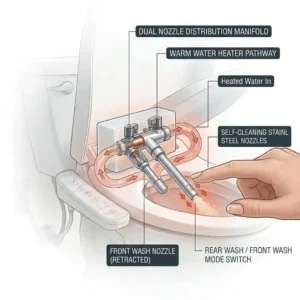
Moving up the technology ladder, the Brondell Swash 1400 abandons the water tank entirely in favor of an instant ceramic heating core and dual stainless steel nozzles. This translates to an endless supply of warm water on demand. The dual nozzles are critical here; instead of one nozzle trying to do everything, it features dedicated front and rear wash wands. In practical terms, this provides a much more hygienic and accurately targeted feminine wash, which is often a pain point on cheaper single-nozzle designs.
I recommend this model heavily for couples because of the programmable user settings. The remote allows you to save two completely different profiles for water pressure, temperature, nozzle position, and spray width. What surprised me most during long-term use was how well the stainless steel nozzles resisted hard water buildup compared to plastic variants. The sit-able lid is a rare, highly practical feature if you have a small bathroom and need to sit on the closed toilet to clip your toenails or bathe a toddler.
Actual buyers frequently highlight the seamless installation process and the sleek, low-profile design that doesn’t make the toilet look like a medical device. At the $600-$700 range, it represents the sweet spot of value, offering 90% of the features found in ultra-premium models without the massive price hike.
-
Pros: Endless warm water, dual user memory settings, heavy-duty sit-able lid.
-
Cons: The air dryer is relatively weak, remote can feel slightly cluttered.
3. Bio Bidet Bliss BB2000
The Bio Bidet Bliss BB2000 is the heavy-duty pickup truck of the bidet world, featuring a hybrid heating system and an infamous vortex enema wash function. The hybrid heater combines a small reservoir with an instant heater, meaning you get immediate hot water that never runs out—bypassing the cold-water sandwich effect (a burst of cold water before the heat kicks in) common in purely tankless models.
This is my go-to recommendation for users dealing with gastrointestinal issues, mobility constraints, or chronic hemorrhoids. The motor in this unit pushes a significantly higher water pressure than TOTO or Brondell. The vortex wash acts as a gentle water enema, which provides incredible relief for constipation—a detail the spec sheet mentions, but you really have to experience to appreciate. The side-panel controls combined with the wireless remote mean you have redundancy if the remote batteries die.
Reviewers almost universally obsess over the water pressure, often claiming they can never go back to gentler models. Sitting in the mid-$600 to $700 range, it is an investment, but the robust build and specialized wash modes make it unparalleled for families and those with specific medical hygiene needs.
-
Pros: Unmatched water pressure, hybrid endless heating, highly effective enema function.
-
Cons: More mechanical noise during operation, aesthetic is slightly utilitarian.
4. Alpha JX
The Alpha JX tackles a common complaint in the industry: noise and bulk. Utilizing a purely tankless heating module, this unit strips away the bulky rear reservoir, resulting in a sleek, minimalist profile that blends beautifully with modern one-piece toilets. The standout feature in daily operation is the “Easy Wash” button—a single press initiates a full wash-and-dry cycle at maximum pressure, eliminating the need to fiddle with multiple settings on the remote.
For the minimalist or the tech-averse user, the Alpha JX is a revelation. In practice, I found the photodiode light sensor to be incredibly well-calibrated; the LED nightlight illuminates the bowl perfectly without blinding you during a 2:00 AM bathroom trip. The pump mechanism is whisper-quiet, meaning you won’t wake up your partner if your bathroom is attached to the master bedroom. It also utilizes an antimicrobial nozzle that self-cleans with high-pressure water before and after every single use.
User feedback highlights the phenomenal value proposition. Floating around the $400-$500 range, it competes directly with entry-level units but offers premium tankless heating. The only consistent gripe is that the water pressure maxes out at a medium-firm level, so it won’t satisfy those looking for the aggressive blast of a Bio Bidet.
-
Pros: Ultra-quiet operation, sleek low-profile design, convenient 1-touch wash mode.
-
Cons: Maximum water pressure is modest, limited angle adjustments.
5. TOTO WASHLET S550e
At the pinnacle of bathroom luxury sits the TOTO WASHLET S550e, a masterclass in plumbing engineering featuring eWater+ technology and an auto-open/close lid. The eWater+ system takes incoming tap water and electrolyzes it, creating a mildly acidic, natural cleaning solution that mists the bowl and cleans the wand. This means the water actually breaks down microscopic waste and bacteria, drastically reducing the frequency you need to clean the toilet with harsh chemicals.
If budget is not an issue and you are building out a smart home, this is the undisputed king. What most buyers overlook is the pure ergonomic joy of the auto-lid. Walking up to the toilet and having the lid silently rise to greet you, then automatically shut and flush (if paired with a compatible TOTO auto-flush kit) feels like living in the year 2050. The instant ceramic heater is flawlessly consistent, and the water aeration is so refined that it cleans thoroughly while feeling incredibly soft against the skin.
Customers who purchase this model in the $900-$1,100 range note that it completely transforms their bathroom experience, with many stating it was the best investment of their entire home remodel. It is expensive, yes, but the total cost of ownership balances out when you consider its extreme durability and the reduction in cleaning supplies over a decade.
-
Pros: Auto-open/close lid, eWater+ sanitization, flawless continuous heating.
-
Cons: Premium price tag, requires a dedicated electrical circuit to avoid tripping older breakers.
🔍 Ready to Upgrade Your Bathroom Setup?
Transforming your daily hygiene routine goes beyond just comfort; it’s about elevating your personal health, reducing plumbing clogs, and cutting down on household waste. Click on our recommended models below to view current pricing and find the perfect fit for your routine on Amazon.
Practical Usage Guide: Mastering Your New Bidet in 30 Days
Buying a premium bidet toilet seat with heated water is only step one. How you maintain it during the first 30 days determines whether it lasts two years or ten.
Step 1: The First 48 Hours
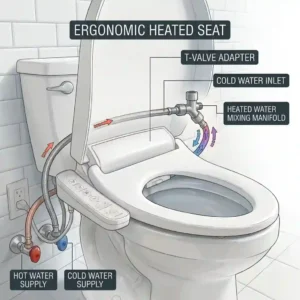
When you first install the unit, you must flush the water lines. Turn on the T-valve slowly and let the water pressurize the system. Do not immediately sit down and crank the pressure to maximum. Start on the lowest pressure setting and the lowest heat setting. Your body needs a few days to acclimate to the sensation.
Step 2: Optimizing the Warm Air Dryer
Many users complain that bidet air dryers take too long (often 3-5 minutes to get completely dry). Insider Tip: Do a quick “pat dry” with a few squares of toilet paper to remove the bulk of the moisture, then run the heated fan for 30 seconds to finish the job. This hybrid approach saves time while still reducing your toilet paper usage by roughly 80%.
Step 3: The 30-Day Maintenance Schedule
After the first month, inspect the mesh water filter located at the T-valve junction. If you live in an area with hard water, sediment can clog this filter, drastically reducing your water pressure. Never use bleach, Clorox wipes, or harsh abrasives on the plastic seat housing. These chemicals break down the polymer and cause micro-cracks over time. Instead, wipe the seat down with a mild soap and water solution, or a dedicated, non-corrosive electronic wipe.
Problem-Solving Clinic: Troubleshooting Common Installation Hurdles
Even with the best models, the integration of water and electricity in a small porcelain space can lead to edge-case problems. Here is how to solve the three most common issues I see in the field.
Problem 1: The Leaking T-Valve
You’ve just installed the seat, turned the water back on, and there’s a slow drip at the metal T-valve.
-
The Solution: The issue is almost always over-tightening. When you crank down on plastic or metal threads with a heavy wrench, you warp the rubber O-ring inside the valve. Turn off the water, unscrew the valve, ensure the black rubber washer sits perfectly flat, and tighten it by hand. Only use a wrench for a final quarter-turn. Always use a thin wrap of Teflon tape on the metal threads.
Problem 2: The Seat Sensor Won’t Activate
You sit down, press wash, and nothing happens.
-
The Solution: Modern units use a capacitive skin sensor or a mechanical weight button located on the right side of the seat ring. If you are petite, or if you sit too far forward on the bowl, your skin might not make contact with the sensor. Adjust your posture slightly backward. If you use a fabric seat cover, remove it—it blocks the skin conductivity required to tell the brain of the bidet that a human is seated.
Problem 3: The GFCI Outlet Keeps Tripping
You run the heated water and the air dryer simultaneously, and the bathroom loses power.
-
The Solution: High-end instantaneous heaters draw up to 1400 watts at peak output. If your bathroom outlet shares a 15-amp circuit breaker with your hair dryer or space heater, it will trip. You must either avoid using hair tools while the bidet is running, or consult an electrician to upgrade the bathroom to a dedicated 20-amp circuit.
How to Choose the Right Bidet Toilet Seat with Heated Water
Selecting the right unit requires matching the hardware to your specific anatomy and household habits. Never just buy the most expensive model; follow this expert decision framework.
-
Evaluate Your Electrical Situation First: Before looking at features, measure the distance from your toilet to the nearest GFCI outlet. Most power cords are exactly 4 feet long. Extension cords are a severe fire hazard in wet environments. If you don’t have an outlet within 4 feet, factor in the cost of an electrician.
-
Determine Your Heating Priority (Tank vs. Tankless): As detailed in our top 5 analysis, if you live alone, a reservoir tank model (like the TOTO C2) will save you money and perform flawlessly. If you share a bathroom with a partner, you absolutely need a ceramic instant heater to avoid cold-water shocks during consecutive uses.
-
Assess Nozzle Construction: Cheaper models use plastic nozzles. While functional, they are prone to calcification. Look for stainless steel wands or antimicrobial resin if your city has hard tap water. This prevents the microscopic spray holes from clogging over time.
-
Ergonomics and Bowl Shape: Bidets are engineered for either “Round” (16.5 inches) or “Elongated” (18.5 inches) toilet bowls. Measure from the bolt holes to the front lip of the porcelain. Buying an elongated seat for a round bowl will result in extreme overhang and cracked hinges within a month.
Bidet Seats vs. Traditional Toilet Paper: The Real Cost Breakdown
We often view a $500 bidet toilet seat with heated water as a luxury expense. However, when we run the long-term math, it is actually a deflationary asset for your household.
According to data compiled by environmental researchers at the EPA, the average American uses roughly 100 rolls of toilet paper per year. For a family of four, that is 400 rolls annually. Depending on the brand, you are spending anywhere from $350 to $500 a year just on paper that gets flushed down the drain.
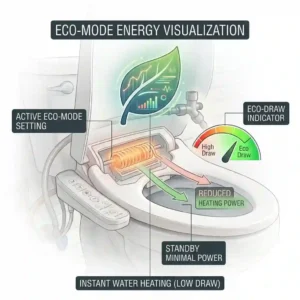
When you transition to a bidet, your toilet paper usage drops by about 80% (retained only for quick pat-drying). In our family-of-four scenario, paper costs plummet to roughly $80 a year. Even when factoring in the slight increase in electricity (about $25-$40 annually for the heating element) and water usage (negligible, as the bidet uses only about 1/8th of a gallon per wash), the system pays for itself in 14 to 18 months.
Beyond the direct financial ROI, the hidden savings lie in plumbing. Traditional multi-ply toilet paper and so-called “flushable” wipes are the leading cause of residential pipe clogs. By eliminating thick paper wads, you significantly reduce the risk of an emergency $300 weekend plumber call.
Features That Actually Matter (And The Marketing Hype to Ignore)
When browsing spec sheets, manufacturers love to throw proprietary buzzwords at you. Here is the expert filter on what actually impacts your daily life.
Features That Change the Game:
-
Adjustable Spray Width / Oscillation: A stationary laser-beam stream can be uncomfortable. Oscillation moves the wand back and forth mechanically, covering a wider surface area for a faster, more thorough clean.
-
Deodorizer: Unlike cheap bathroom sprays that just mask odors with artificial pine scent, bidet deodorizers use an active carbon filter and a fan to physically pull foul air out of the bowl and neutralize the particles. It works incredibly well.
-
User Presets: If you share the bathroom, having a 1-touch memory button for your preferred temperature and pressure saves you from having to click through menus every morning.
Features You Can Safely Ignore:
-
Pulsating / Massage Wash: Marketed as a “massage,” this feature just pulses the water pressure high and low. In ten years, I’ve never met a client who actually used this function past the first week. It’s a gimmick.
-
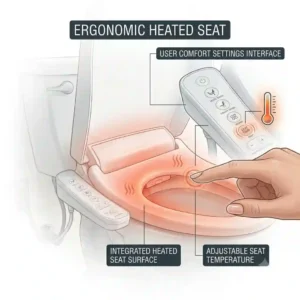
Extreme High Temperatures: Some models boast seat temperatures up to 105°F. Unless your bathroom is outdoors in Alaska, a seat this hot is deeply uncomfortable and can cause minor skin erythema (toasted skin syndrome) over time. Stick to the low or medium heat settings.
The “Anti-Recommendation”: Who SHOULD NOT Buy Certain Models
It is crucial to understand that even a five-star, $1,000 product can be a terrible fit for the wrong user.
For example, I strongly advise against buying ultra-slim, purely tankless models (like the Alpha JX or comparable minimalist brands) for elderly users with severe mobility issues or dementia. Why? Because tankless models often rely on complex side-panel remotes with tiny LCD screens. If a user has poor eyesight or arthritis, a 20-button remote is intimidating and frustrating. For these users, a slightly bulkier model with a simplified, large-button attached side arm is vastly superior, even if it doesn’t look as modern.
Similarly, if you live in a rural home operating on an old, low-yield well-water system with poor native house pressure, you should avoid purely instant-heating models. Instant heaters require a minimum PSI from the house to push the water through the heating coils effectively. If your house pressure drops, the internal safety sensors will shut off the heater to prevent dry-firing. In these edge cases, a reservoir tank model that pre-fills with water using a pump is the much safer bet.
Final Verdict: Elevating Your Daily Routine
Making the leap to a bidet toilet seat with heated water is one of the rare home upgrades that yields immediate, daily dividends for your personal health and comfort. The era of abrasive dry paper is quickly ending, supported by a wealth of data on hygiene from medical professionals and environmental groups alike (check out the history and medical evolution of the bidet on Wikipedia for a fascinating deep dive).
Whether you opt for the budget-friendly reliability of the TOTO C2, the endless comfort of the Brondell Swash 1400, or the sheer technological dominance of the TOTO S550e, the key is matching the hardware to your electrical setup and household traffic. Don’t let installation fears hold you back; the process is straightforward, and the resulting transformation in your daily routine is profound. Ditch the paper, embrace the water, and upgrade your standard of living.
FAQs
❓ Does a bidet toilet seat with heated water require a hot water line connection?
✅ No. These electronic seats connect exclusively to your existing cold water valve behind the toilet. They use an internal electric heating element—powered by a standard standard 120V GFCI outlet—to instantly warm the cold water as it flows through the device…
❓ Can a heated bidet seat fit on my existing toilet?
✅ Yes, they are designed to fit 95% of standard residential toilets. You only need to measure whether your toilet bowl is “Round” or “Elongated” and ensure you have at least 1.5 inches of clearance between the seat bolt holes and the toilet tank…
❓ Are heated bidet seats sanitary for multiple people to use?
✅ Yes, they are highly sanitary. Modern units feature retractable wands that remain housed behind a splash guard during the toilet’s primary use. Before and after every wash cycle, the nozzles self-clean with high-pressure water, and premium models use antimicrobial materials…
❓ How much electricity does a heated bidet seat use?
✅ It depends on the heater type. A reservoir model runs a low-wattage element constantly, costing about $25-$35 annually. Tankless models draw high wattage (up to 1400W) but only for 60 seconds at a time, resulting in roughly the same low annual energy cost…
❓ Can I install a bidet seat myself without a plumber?
✅ Yes. If you have a functioning GFCI outlet nearby, installation is a simple DIY project that takes about 30 minutes. It requires only basic tools (a screwdriver and an adjustable wrench) to swap the seat and attach the provided water T-valve splitter…
Recommended for You
- 5 Best Options for a chair height toilet with bidet in 2026 (Expert Review)
- 5 Top Picks: Bidet With Soap Dispenser Expert Review (2026)
- 5 Best Tankless Bidet Toilet Seats in 2026 (Expert Tested)
Disclaimer: This article contains affiliate links. As an Amazon Associate, I earn from qualifying purchases. If you purchase products through these links, we may earn a small commission at no additional cost to you.
✨ Found this helpful? Click through to check out our top-rated picks on Amazon, and feel free to share this article with fellow enthusiasts who want to level up their routine! 💬🤗
[addtoany]
